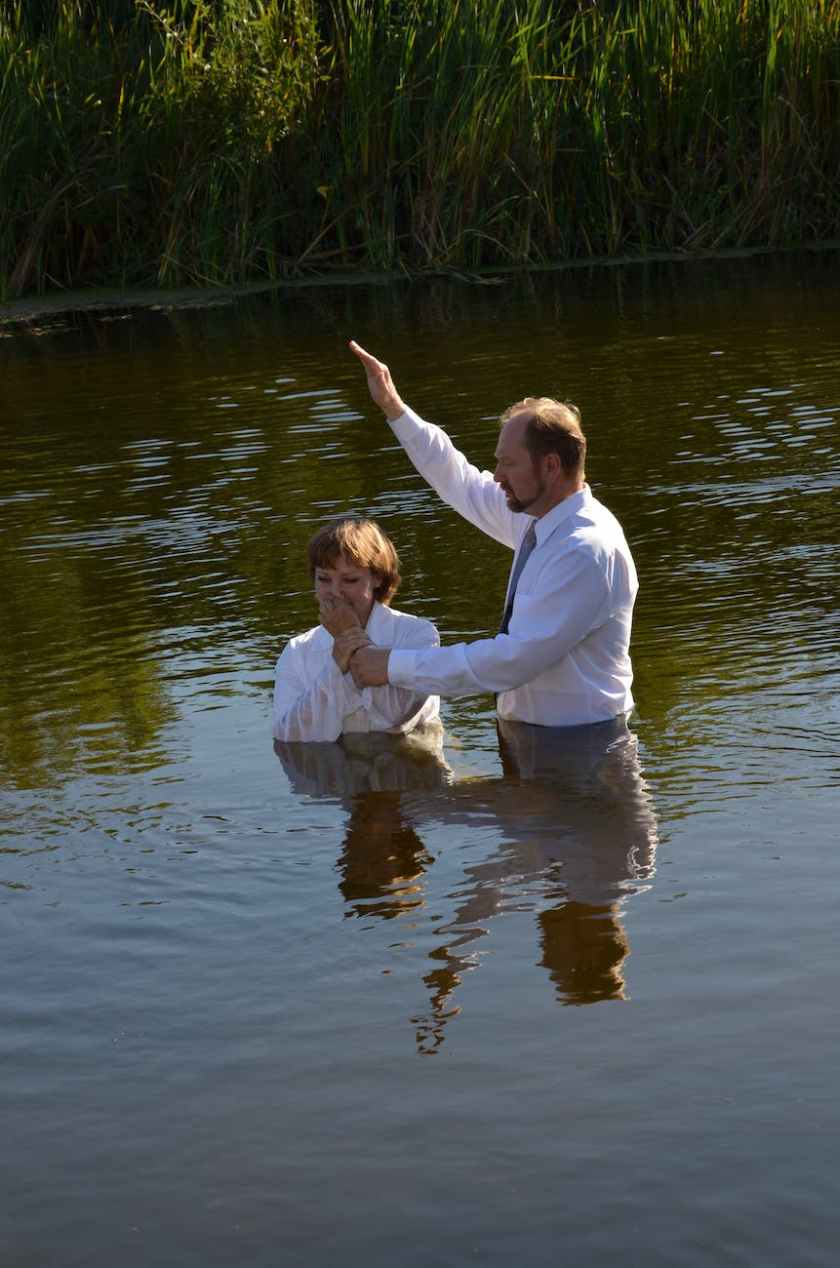
Gospel Meeting at Sherman Drive church of Christ

Leave a comment

All are invited to attend our upcoming gospel meeting with Mac Deaver, May 19-22, 2013. Click on the link for full brochure.

Mac Deaver Gospel Meeting May, 2013

The Immanent Presence of Jehovah (Part 2 of 2)

Leave a comment

By Michael Hildreth

According to the teaching of the Scriptures, God is not only within the physical universe, but he is presently holding it together by his presence (Col. 1:16, 17). The presence of God in the heavens and earth is essential for the continued existence of physical life. Thus, the immanent nature of God is necessary for man’s mortal existence. The Scriptures teach, “The Spirit of God hath made me, and the breath of the Almighty giveth me life” (Job 33:4). This passage illuminates the Bible reader to the fact that God is constantly working in his creation to sustain physical life. The universe is not as a watch which has been wound up by the watchmaker and allowed to wind down by itself over time. The Lord is a “watchmaker” who continues to hold his “watch” and he continually maintains it in working condition. He truly “giveth to all life, and breath, and all things” because it is in him in which “we live and move and have our being” (Acts 17:25, 28). Without his supply of air to our lungs, water and food to our bodies, light and rain to our fruit bearing plants, the rotation and movement of our planet and every other work he does in our world, we all see death. The same could be said concerning the spiritual life of God’s people. If the Holy Spirit is not personally sanctifying the child of God, there can be no spiritual life. His immediate presence is absolutely essential to our physical and spiritual existence. If we do not have the sanctification of the Spirit, by being grafted into the vine of Jesus Christ, we will be “free from righteousness” and our end is spiritual death (John 15:1-7; Rom. 6:20-23; Eph. 2:1-10; 2 Thess 2:13).

That God is present and active in the physical universe and in the lives of his people is unmistakable. Isaiah recounts his immanence in Isaiah 63:7-14.

I will make mention of the loving kindnesses of Jehovah, and the praises of Jehovah, according to all that Jehovah hath bestowed on us, and the great goodness toward the house of Israel, which he hath bestowed on them according to his mercies, and according to the multitude of his loving kindnesses. For he said, ‘Surely, they are my people, children that will not deal falsely’: so he was their Saviour. In all their affliction he was afflicted, and the angel of his presence saved them: in his love and in his pity he redeemed them; and he bare them, and carried them all the days of old. But they rebelled, and grieved his Holy Spirit: therefore he was turned to be their enemy, and himself fought against them. Then he remembered the days of old, Moses and his people, saying, ‘Where is he that brought them up out of the sea with the shepherds of his flock? Where is he that put his Holy Spirit in the midst of them? That caused his glorious arm to go at the right hand of Moses? That divided the waters before them, to make himself an everlasting name? That led them through the depths, as a horse in the wilderness, so that they stumbled not?’ As the cattle that go down into the valley, the Spirit of Jehovah caused them to rest; so didst thou lead thy people, to make thyself a glorious name.”

The reader does well to take note that “the angel of his presence” is a reference to the preincarnate Son of God, who appeared throughout many instances of Bible history (i.e. Gen. 22:11-16; Exod. 2:3-14; Zech. 12:8). This further evidences the work of Jehovah, as that which occurs in the physical realm. However, the question often asked is, “Does the God of the Bible continue divine involvement with his people, as he led Israel under the Old Covenant or even more so?” One must go to the New Testament and examine what it teaches about this consideration to find a correct answer to the question.

The Relationship Between Immanence and Indwelling

As God was present in his ancient temple, under the Mosaic era, he continues to be present in his temple today, which is the church of the living God (1 Kings 8:12-13; Acts 17:24; 1 Cor. 3:16; 6:19; 1 Pet. 2:5). This is a literal, personal, direct, and immediate presence which is evident to the Christian and to those around him (John 7:37-39; Eph. 1:13, 14; 1 John 3:24). It is not seen with empirical observation but with evidences in the Christian walk. The Spirit’s personal presence is proven, not only by the teaching of Scripture concerning this fact, but by the manifestations of the Spirit in the life of every faithful disciple of Jesus. The Bible calls these “the fruit of the Spirit,” “fruit unto sanctification,” and “the peaceable fruit of righteousness” (Rom. 6:22; Gal. 5:22; Heb. 12:11). As God was personally in the burning bush, by the direct presence of his Son, he is personally in the Christian, by the direct presence of his Spirit (Exod. 3:4; John 8:58; Gal. 4:6; Eph. 2:22). God has always been working in his people through the prophets but at the arrival of the New Covenant, he would directly work within all of his people by the instrument of his Spirit (Ezek. 11:19, 20; 36:25-27). It is abundantly clear that the God of both Testaments was both transcendental, in eternity, and immanent, with the people serving him. Notice that both attributes are evident in Isaiah 57:15.

For thus saith the high and lofty One that inhabiteth eternity, whose name is Holy: I dwell in the high and holy place, with him also that is of a contrite and humble spirit, to revive the spirit of the humble, and to revive the heart of the contrite.”

It is very clear, as the Bible reader examines this passage, that God is dwelling in eternity and he is also dwelling with the believer, to revive his spirit and his heart. Under the church dispensation, God’s relationship with man would be even more intimate. The spirit of man would be submerged in God’s Spirit and he would dwell continually within man’s heart to strengthen him for righteousness (Rom. 8:9; 1 Cor. 6:11; 12:13; Eph 3:16-20; Tit. 3:5).

The Spirit of God is omnipresent but there is a special, literal presence among the people who belong to Jesus Christ; the church of Christ. This is confirmed in many OId and New Testament passages (e.g. Ezek. 39:29; Joel 2:28; Acts 2:4; Rom. 8:15; 2 Cor. 1:21-22; Eph. 5:18). Notice the teaching of God’s word concerning the omnipresence of the Spirit in Psalm 139:7-10.

Whither shall I go from thy Spirit? Or whither shall I flee from thy presence? If I ascend up into heaven, thou art there: If I make my bed in Sheol, behold, thou art there. If I take the wings of the morning, And dwell in the uttermost parts of the sea; Even there shall thy hand lead me, And thy right hand shall hold me.”

It is sheer absurdity to deny the personal indwelling of the Holy Spirit in the Christian, in view of the teaching of God’s word concerning his immanent presence in the physical universe! As an omnipotent God, he is able to reside wherever he chooses to be and man’s attempts to limit his presence to a representative habitation in the believer are utterly vain. The word of God is clear that the Lord is living within his people by the Holy Spirit who is given at the point of obedient faith (Acts 2:38; 5:32; Rom. 5:5; Eph. 1:13-14; 2:22). To deny his personal indwelling within the hearts of faithful Christians is to deny his immanence and to nullify a facet of how the Godhead manifests himself in the physical world.

Some within churches of Christ have failed to recognize the immanence of God and it has led to a false understanding of the indwelling of the Holy Spirit in the church. They have not acknowledged the teaching of the Scriptures at face value concerning (1) God’s immanence in the physical universe and (2) God’s indwelling in his people by his agent of immanent power: the Holy Spirit. It would do them much good to more closely study the attributes of God and reconsider the many passages presenting the truth concerning God’s immanent presence in the physical body of the Christian. The truth will prevail in light of a closer examination of the nature of God and his habitation in this physical realm.

Conclusion

The Scriptures communicate the existence of a God who is both transcendant, above his creation, and immanent, within his creation. The belief that argues for a God that is present in eternity but not personally in the physical universe is false. This is Deism. The belief that argues for a God that is present both in heaven and on earth is supported by the Scriptures.

Churches of Christ must throw off the Deistic notion that the Holy Spirit of God is not present and active within the Lord’s Body. The source of this error is a radical idea of transcendentalism and a denial of God’s immanence. While not all who subscribe to the doctrine of the representative indwelling of the Spirit will outright deny God’s immanence, an underlying problem in the dispute is that more than a few have failed to accept everything the Bible teaches concerning the immanent presence of Jehovah. Once it has been established in the minds of Christians today that God is, indeed, immanent, there will be less difficulty in teaching the doctrine of the Holy Spirit’s indwelling of the Christian.

Flawed from the Beginning

1 Comment

By Mac Deaver

For years I have been greatly interested in what is called The Restoration Movement of the 1800s. As a young student, I loved to read of the great men who called others back to a more serious consideration of the Scriptures and to see more clearly the then current religious scene that had been created through years and years of Bible neglect. And I still think that current members of the church owe a tremendous debt of gratitude to so many religious pioneers who have gone before and who were willing to break with never proved religious tradition and to break rank with those who proved to be non-Christians after all, but who claimed such status before God and man.

However, as we learn in the study of the period, not all those who came to be endorsers of and even participants in the “movement” understood clearly what a person had to do to become a Christian, and while some learned exactly what was essential , others who were involved did not. In fact, as we shall soon see, in this brief piece, the “movement” was flawed from the beginning. The movement was based on a cracked foundation that could not support the hoped for superstructure. And while it has had lasting effect to our good day in America, there were some concepts from the beginning that characterized some of its most prominent leaders that necessitated its limitation by division within because of its initial failure to divide from many without!

But before I continue, let me stress that the effort to “restore” New Testament Christianity was indeed a movement in the sense that there was an historical effort in time that was socially influential and that attempted to call men back to the Bible. It was an effort to call men back to original ground, at least allegedly so. To restore the “ancient order” of things was the goal because the then current religious division was deemed so intolerable by some, and that division seemed to make any religious progress most difficult if not impossible. And so a harmony or unity of all “Christians” (those who professed faith in Christ and obeyed him in such things as they understood) was sought and advocated upon a basis less divisive and less complex. A committed return to a more simple basis of spiritual fellowship was the desired item in the hearts of those longing for an end to the unending division within the “church” as the church was being viewed.

Now, the idea is only possible (much less essential) if original ground can be located. If the truth, the whole truth, and nothing but the obligatory truth regarding (1) how one enters the kingdom and (2) how one remains in the kingdom cannot be located, articulated, practiced, and successfully defended, then such an effort at “restoration” is wholly misguided because it is impossible to restore what cannot be found. But as we shall see, the working assumption that original ground could be located on the one hand (1) included some necessary concepts that on the other hand (2) were expressly excluded from the process of restoration. In fact, from the beginning there was an unrecognized conceptual self-contradiction offered as the right approach to the restoration of that original sacred ground. And so the “movement” was an attempt to restore what it was, in fact, impossible to restore given the way that it was going about the very business of restoration. If original ground were located, it would have to be found by going against some of the very foundational ideas upon which it was being launched.

Of course, it is very easy for me to criticize someone living in the 1800s who was for the first time beginning to see differences between what he found in his New Testament and religious doctrine that he had been brought up to believe in some denomination. And I certainly do not want to appear as an ungrateful recipient of great learning that took place during that time and within that movement.

But, I am more interested in (1) finding and in knowing that I have found what they were trying to restore themselves (the purity of original Christianity) than in (2) merely admiring a certain way of self-imposed looking, the effect of which would have to prevent one’s seeing clearly at all.

Let me begin the task of identifying the cracks in the foundation of the movement by first pointing out a few facts that must be faced by anyone who approaches the Scriptures in the effort to find the truth. Consider the following True-False statements:

T F 1. It is possible for a man to find all the truth necessary to his becoming a Christian and to find all the truth necessary to his remaining a faithful Christian.

T F 2. It is possible for a man to find only some of the truth necessary to his becoming a Christian and to find only some of the truth necessary to his remaining a faithful Christian.

T F 3. It is impossible for a man to find any truth necessary to his becoming a Christian and to find any truth necessary to his remaining a faithful Christian.

T F 4. It is possible for a man to find all the truth necessary to his becoming a Christian but only to find some of the truth necessary to his remaining a faithful Christian.

T F 5. It is possible for a man to find only some truth necessary to his becoming a Christian but to find all the truth necessary to his remaining a faithful Christian.

Now, these statements need a clear and careful answer. In the light of Scripture, #1 is the correct statement. Statements #2 through #5 are false (John 8:31, 32; 1 Tim. 2:4; Heb. 6:1; Eph. 5:3-14). And this truth would, at first, seem to have been grasped by the initial promoters of the restoration idea.

Now, let us consider several more relevant True-False statements that have to do with the very prospect of restoring the ancient order of things.

T F 1. Since Christians are the only components of the church, and since the first True-False statement above is correct, then we know that it is possible to locate in Scripture what is required of men today in order for them to be added to the Lord’s church (Gal. 1:6-10).

T F 2. Since we know that all men today must obey the same gospel in order to be added to the church, then we know that the church is composed only of those who have done the same thing in order to enter (Eph. 4:1-7).

T F 3. Since the church is composed of only those who have done the same thing (obeyed the same gospel) in order to enter, then spiritual fellowship is only rightly extended to those who have obeyed that gospel and thus who have entered (1 John 1:3; 2 Cor. 6:14-18).

T F 4. It is possible for a person to claim to be in God’s favor and a devoted follower of Christ while never having become a Christian at all (Rev. 2:9; Matt. 7:21-23).

T F 5. It is possible for a Christian to cease being a faithful Christian (Gal. 5:4; 1 John 2:19).

Now, while it is true that Christians are under obligation to love all men (Matt. 22:37-40), we have never been under obligation to treat even most men as Christians. For most men simply are not, and most men do not even claim to be. And, even more to the point, most men do not even desire to be. However, while doctrinally, the matter is fixed as to who is and who is not a Christian, a problem arises when –

  1. a non-Christian seeks to extend spiritual fellowship to another non-Christian when both parties claim to be Christians and yet neither one is.
  1. a Christian seeks to extend spiritual fellowship to a non-Christian in spite of the Christian’s knowing that the non-Christian is clearly a non-Christian.
  1. a Christian seeks to extend spiritual fellowship to a non-Christian because even though he knows on the one hand that the non-Christian is not a Christian, he knows that the non-Christian at least claims to be a Christian, and the Christian considers it more loving to endorse the non-Christian in his sin than to deny his claim. After all, the Christian isn’t God!
  1. a Christian seeks to extend spiritual fellowship to a non-Christian because the Christian himself no longer is sure of the essentiality of obedience to the gospel in order for a person to have a rightful claim to Christian status. He has now subscribed to a doctrine of “grace” that by redefinition allows him to fellowship those who make the claim to be Christians on the basis that, after all, who is he to say they are not. Again, truth has now become “unclear” truth when compared to a “clear” claim especially since the truth has no feelings to be hurt by rejection but the personal claimant surely does?

Note: At this point it may not bother him because it never dawns on him that if “grace” is actually extended to one who claims to be a Christian but who has not, in fact, obeyed the gospel, for all he knows then, that same “grace” may be extended to anyone who does not even claim to be a Christian. If a formerly viewed false claim has now become a possibly true claim because of a redefinition of grace, then why is a claim necessary (for the divine extension of grace) for the reception of grace at all? If one does not have to know and obey the truth in order to be saved, then no clear claim about anything is necessary to salvation at all! With his redefinition of “grace,” he is in no position to deny the salvation of all men since he knows that God desires that universal salvation (2 Pet. 3:9; 1 Tim. 2:4). Historically, truth has often been sacrificed on the altar of friendship and false claim. But if the non-Christian can’t prove the accuracy of his own claim to be a Christian, and if the Christian does not care about the absence of justification for the non-Christian’s claim to Christian status, then the truth does not matter to either the Christian or the non-Christian! Is such a spiritual fellowship worthy of a search and then support? What is the value of such a fellowship or of a “movement” that might embrace it?

Now, let us proceed by considering some things early on declared by two prominent men in the early days of the American Restoration Movement. And as I consider these quotations, I do so with a view toward establishing the point that there were at least three cracks in the original foundation of restoration effort or three flaws from the beginning. And for the purpose of this article, I mean by “beginning” 1809 when Thomas Campbell wrote the Declaration And Address. And the “cracks” that I will identify are (1) a faulty hermeneutic which was an attempt at the time to get rid of all human opinions as impediments to the rightful extension of spiritual fellowship to all Christians in the denominations, but which hermeneutic unwittingly created (2) a situation in which it was impossible to maintain the correct distinction between faith and opinion, and (3) a willingness to extend spiritual fellowship to people who were not complying with the nature and purpose of baptism as they came to understand it.

In the Declaration And Address, Thomas Campbell stated that he was not trying to create another human creed as a term of communion. What he was proposing was a route to “original ground” so that men in his day could “take up things just as the apostles left them” (Historical Documents Advocating Christian Union, edited by John Allen Hudson, p.107; hereafter this book will be referenced as HD). Thus, his goal in providing the thirteen propositions listed in the Address were based on the view that the apostles had left some things for us that needed to be recovered in thought and practiced in life. And these things needed to be distinguished from other things so that religious reform could indeed take place. All of the various additional doctrinal positions that had been taken over the centuries and which had accumulated as divisive creedal statements that kept equally sincere brethren in segregate communities simply had to be removed from human thinking if the unity required in Scripture was going to be achieved.

But how did Thomas Campbell come to the conclusion that there was an obligatory unity that Christians were obligated to practice? Whence came this understanding? How did he come to the conclusion that there was a kind of unity that Christians were under obligation to practice? How did he know that the obligation to uphold that unity lasted longer than the first century? And why did the Address seem to him to be important as an applied way of getting rid of the accumulated human decrees that stood in the way of the unity of Christ?

The Declaration And Address didn’t just fall from the sky. It was a document that originated in the mind of Thomas Campbell. Well, let us ask ourselves some questions as to the nature of that document as it first existed in thought in his mind. And let us be specific. Let us think about his goal of trying to get back to original ground, sacred ground not spoiled by wrong human thinking.

T F 1. The view that Thomas Campbell and all other men should only do what is authorized by Christ as revealed in the New Testament is itself a mistaken and unintended part of the accumulation of mere human opinions that stand in the way of the unity of Christ.

T F 2. The view that Thomas Campbell and all other men should only do what is authorized by Christ as revealed in the New Testament is a part of “original ground” discoverable by human reason but without the exertion of opinion.

Or let us word the two statements a little differently and make our point more simple:

T F 3. The view that Thomas Campbell and all other men should only do what is authorized by Christ as revealed in the New Testament is itself a mere human opinion.

T F 4. The view that Thomas Campbell and all other men should only do what is authorized by Christ as revealed in the New Testament is itself a matter of biblical faith.

Dear reader, now think about those four True-False statements very carefully. And with regard to the first and third statements, surely Campbell did not mean to be binding another mere human opinion on others in his attempt to get rid of the then current problem of binding human opinion on men as a basis of establishing and maintaining religious fellowship. He would certainly have no right to bind his own personal opinion that “original ground” should be recovered if such were merely an opinion, while at the same time deploring the use of human opinion as the means of establishing spiritual orthodoxy. So, we would take it that statement #1 is false and that statement #3 is false. Thomas Campbell’s view that “original ground” should be desired and that by it alone men could maintain the unity of Christ is a part of “original ground” or to express it another way, it is a part of biblical faith itself and certainly is not a matter of mere human opinion. So, statements #2 and #4 are true.

Paul’s words to the brethren at Colossae establish the correctness of the foregoing conclusion. “And whatsoever ye do, in word or in deed, do all in the name of the Lord Jesus, giving thanks to God the Father through him” (Col. 3:17). Truly, to do things in the name of Christ is to obey God rather than man (Acts 5:28, 29; cf. 4:12). And this is the very thing that was Campbell’s goal. It was a noble goal, but his process for accomplishing it was flawed. Now, just what do we mean?

Proposition #3 in the Declaration And Address is too restrictive in its statement of what constitutes the pattern of authority whereby Scriptural unity can be obtained and maintained. Campbell in trying to reach a position that would prohibit the constant dividing up into various religious camps said that “nothing ought to be inculcated upon Christians as articles of faith; nor required of them as terms of communion, but what is expressly taught and enjoined upon them in the word of God. Nor ought anything to be admitted, as of Divine obligation, in their Church institution and managements, but what is expressly enjoined by the authority of our Lord Jesus Christ and his apostles upon the New Testament Church; either in express terms or by approved precedent” (HD, 108). His words “expressly enjoined” are what we call “direct statement” and his “approved precedent” are what we call “approved example.” But Campbell left out the third category or way that the Bible authorizes. He left out what in our day came to be called “necessary inference,” but which later was more appropriately identified as “implication.” Campbell intentionally omitted that route to the record.

We can appreciate his reluctance since he was trying to avoid the mental route that had caused him so much pain. He well knew the agony of wrong inference when men drew conclusions not provable by Scripture and bound these conclusions on others. That is what had created the warring denominational camps. But rather than make the distinction between (1) inferring what is actually implied as can be established by logical argument, and (2) inferring what is not implied (thus merely drawing a conclusion not implied by the Bible which conclusion is then a mere human opinion), Campbell simply attempted to leave the whole process of “inference” out of ascertaining the pattern of authority. The pattern would consist of (1) direct statement and (2) approved example only.

In Proposition #5 we have the wonderful statement that “Nothing ought to be received into the faith or worship of the Church, or be made a term of communion among Christians, that is not as old as the New Testament” (HD, 110).

But when we come to Proposition #6, we see Thomas Campbell’s fear of inference as a category or route to Bible authority. Read it carefully in full:

“That although inferences and deductions from Scripture premises, when fairly inferred, may be truly called the doctrine of God’s holy word, yet are they not formally binding upon the consciences of Christians farther than they perceive the connection, and evidently see that they are so; for their faith must not stand in the wisdom of men, but in the power of God. Therefore, no such deductions can be made terms of communion, but do properly belong to the after and progressive edification of the Church. Hence, it is evident that no such deductions or inferential truths ought to have any place in the Church’s confession” (HD, 110).

Notice, please that while Campbell was honorably trying to prevent the continued application of human authority as binding on men as an appendix to or substitute for divine authority, in the very way that he was attacking “opinion binding,” he went too far by undermining the very procedure that he was, in fact, already employing. In looking at human reason the way that he was and in describing it the way that he did, he was creating unintentionally an impossible and self-contradictory task for himself and others. Consider carefully, please, that on the one hand (1) Campbell allows for the fact that when inferences and deductions are “fairly inferred,” the conclusions reached may be called “the doctrine of God’s holy word,” and yet on the other hand, (2) Campbell says that those conclusions, though a part of God’s holy word, are the product of human wisdom rather than divine power. Do you see a problem just here, dear reader?

If the principle that Campbell is upholding in his proposition #6 is the product of “fair inference” from Scripture premises, then although it may be a part of God’s holy word, it cannot be bound on anyone as divine authority since it is the product of Campbell’s own human reasoning and, therefore, is a part of human wisdom rather than the product of divine power. Therefore, Campbell’s own view which was reached by inferring what the Bible was implying (about substituting human authority for divine authority in his day) was a conclusion that (though correct and a part of God’s holy word) had no “place in the Church’s confession.”

Rather than stress the absolute necessity of correct reasoning (cf. 1 Thess. 5:21: Rom. 12:2), he attacked human reason, in the act of deduction, as leading to “the wisdom of men.” The truth of the matter is that it is only by the correct use of human reason that a person can come to comprehend that he is under the binding authority of the New Testament at all!

So, I ask, how in the world could the appeal in the Declaration And Address (to those viewed by Campbell as Christians) have any rightful place in their thinking? If his conclusion that there should be a rediscovery of “original ground” was rightly inferred from what the Bible implied, then (although correct and a part of God’s holy word according to Campbell himself), it still stood in the “wisdom of men” rather than in the “power and veracity of God.” According to Campbell, if these “Christians” couldn’t see the accuracy of the plea and thus the need of the plea for “restoration,” then the plea could not be “formally binding” on them, because he said that fairly inferred conclusions drawn from Scriptural premises cannot be “formally binding upon the consciences of Christians farther than they perceive the connection, and evidently see that they are so.” Therefore, unless the other “Christians” in the denominations were convinced that Campbell’s call for restoration was good and needful, and if they were convinced of the need to participate, they would be following the “wisdom of men” rather than the “power and veracity of God” in submitting to a principle that Campbell learned by proper deduction from Scripture premises.

Therefore, it is clear that the first “flaw” from the beginning was a hermeneutical (interpretational) flaw that appeared by way of Campbell’s unintentionally attacking “implication” as a way of learning what is binding upon men.

And since that error was advocated in the Address, that meant that there was no clear way for Campbell to make a clear distinction between (1) matters of faith and (2) matters of opinion although he was trying desperately to get rid of the notion of binding mere human opinion on anyone. If conclusions “fairly inferred” were still evaluated as standing in “the wisdom of men” rather than in “the power and veracity of God,” then there could be no precise distinction drawn between “God’s holy word,” learned by “fair inference” and mere human opinion both of which are products of a man’s mind.

In our day, when it comes to the matter of “ascertaining Bible authority” (that is also the name of one of my father’s well-received books), we have said that the Bible authorizes by (1) direct statement, (2) approved example, and by (3) implication. Of course, implication and approved example are both derived from direct statements, but the three categories are correct as identifications of literary function or the ways that we learn what we must do, what we may do, and what we must not do. And by the three routes to authority, we find our obligations, our options, and our prohibitions.

In Campbell’s words “fairly inferred” refer to a conclusion rightly deduced from Bible premises. “Fair inference” would be correct inference from Bible implication. That is, we fairly infer when we correctly infer what the Bible actually implies. These doctrines thus inferred can be, then, stated as conclusions of valid syllogisms. They become a part of a sound argument. And a sound argument is a valid argument with truthful premises. The argument is, therefore, dependable. The conclusion of a sound argument is true. If we infer what the Bible does not really imply at all, we draw a conclusion that is simply an opinion, and there is no sound argument whatever that can be constructed in its defense.

All doctrinal controversy can rationally only be settled by the appeal to a sound argument. And this is an obligation stated in Scripture. This is what the very notion of “proof” entails! According to Ruby’s Logic, An Introduction, the “law of rationality” is the principle that “We ought to justify our conclusions by adequate evidence” (Ruby, 131). Jesus always complied with that law or regulative principle of human reasoning. And Paul made our deference to that law a matter of biblical obligation in at least two passages of Scripture. He told the brethren at Thessalonica to “prove all things; hold fast that which is good,” (1 Thess. 5:21), and he told the saints in Rome, “And be not fashioned according to this world: but be ye transformed by the renewing of your mind, that ye may prove what is the good and acceptable and perfect will of God” (Rom. 12:2).

But as brother Thomas B. Warren taught us long ago, since none of us (and this applies to Thomas Campbell as well as to Thomas Warren and all men living today) can find his own name written in the Bible, he cannot learn that he is even under Bible authority without rightly inferring what the Bible implies! We cannot even recognize our connection to and the necessity of submitting to Bible authority without correctly inferring what the Bible implies! Although the Bible provides our obligations, options, and prohibitions, it reaches us or connects us to those ways of ascertaining Bible authority only or completely by way of implication. That is the one and only route that provides our connection to the binding authority of Holy Writ!

Since the Bible was originally addressed to others (none of us living today were even born when even one book of the Bible was written), we can only come to recognize that we, too, like the original audience are under Bible authority only by or exclusively by inferring what the Bible implies. And if this conclusion “fairly inferred” cannot be bound on anyone because it is simply a part of the wisdom of men rather than the product of the veracity and power of God as described by Thomas Campbell, then no man living today is under Bible obligation to do one single solitary thing! And this would also mean that no one living in Campbell’s day including Campbell himself was under Bible authority at all. That is how crucial the mistake made by Thomas Campbell was. Given the way that he was describing “fair inference” and “deduction,” he could not clearly distinguish between faith and opinion at all when it came to matters of binding obligation.

His idea of getting rid of binding human opinion in the religious arena was indeed correct! But the way he described the process whereby he thought that such could be achieved made it impossible for one to even be under divine authority to do such a thing.

And perhaps, because of the way that he confusedly and unintentionally blurred the distinction between human opinion and biblical faith, that at least partially explains why it is that he and later his son, Alexander, were so very willing to spiritually fellowship denominational people, including preachers, who did not share the “restoration” viewpoint. This is the third “flaw” that I want to mention.

When we read of the way that Thomas and Alexander Campbell related to other religious people in their day, we see that they were willing to spiritually fellowship them even though they were practitioners of denominationalism and not necessarily supporters of the idea of recovering original ground. The Campbells had come out of the Presbyterian church themselves. But their break with that group with all its historical internal division, did not mean that they would, however, refuse to recognize as faithful Christians those from whom they were now somewhat religiously estranged. And as their comprehension of certain Bible truths grew, even though they remained very ecumenical in their regard to the sects, yet their knowledge growth brought them into a closer affiliation with other religious people who had learned the same truth.

For example, following the Campbells’ learning that “baptism” was, in fact, in Scripture “immersion,” the little Brush Run church across the West Virginia line in southwestern Pennsylvania became organizationally connected to the Baptists. After writing out a statement which entailed a rejection of human creeds as a basis of fellowship, and declaring their willingness to become a part of the Redstone Association if they would be allowed to uphold what they were convinced the Bible taught, the Brush Run church then joined that Baptist association in 1813 (West, Search For The Ancient Order, Vol. I, p. 61). Alexander wrote to a relative in 1815,

“For my own part I must say that, after long study and investigation of books, and more especially the Sacred Scriptures, I have through clear convictions of truth and duty, renounced much of the traditions and errors of my early education. I am now an Independent in church government; of that faith and view of the gospel exhibited in John Walker’s Seven Letters to Alexander Knox, and a Baptist so far as regards baptism. What I am in religion I am from examination, reflection, and conviction, not from ‘ipse dixit’ tradition or human authority” (West, pp. 61, 62).

Later, while Alexander Campbell was working with the Wellsburg church, that congregation joined the Mahoning Baptist Association (West, pp. 66-68). So, while the Campbells were advancing in their understanding of Scripture, and while they were making headway in teaching the non-denominational nature of early Christianity and the necessity of unity among Christians, they still recognized Christians among the sectarians groups.

And later, in 1837, Campbell received a letter from a woman in Lunenburg, Virginia, in response to which Campbell again revealed his attitude toward the sects, and which attitude bothered some of his own brethren who thought that Campbell was surrendering ground gained in the reform effort. The woman from Lunenburg had been surprised by the fact that in Campbell’s periodical, Campbell had recognized “the Protestant parties as Christian” (Campbell, Millennial Harbinger, September, 1837, p. 411).

In response, Campbell first proposes the following:

“In reply to this conscientious sister, I observe, that if there be no Christians in the Protestant sects, there are certainly none among the Romanists, none among the Jews, Turks, Pagans; and therefore no Christians in the world except ourselves, or such of us as keep, or strive to keep, all the commandments of Jesus. Therefore, for many centuries there has been no church of Christ, no Christians in the world; and the promises concerning the everlasting kingdom of Messiah have failed, and the gates of hell have prevailed against his church! This cannot be; and therefore there are Christians among the sects” (Campbell, 411).

So, the basis on which Campbell rests his view that there must be Christians in the sects is that unless one is willing to grant that contention, then he must admit that in history the church at some point ceased to exist! But I ask the reader, is that true? Why would that admission necessarily have to follow? Isn’t it possible that Christians could have existed ever since Pentecost in the world without their getting involved with and amalgamated with some denomination. Even if history ignored the existence of non-denominational Christians in its record (given their small numbers), does anyone today have the right to claim that the church simply stopped existing in history unless one admits that it existed in combination with Catholicism and Protestant denominationalism or among Jews, Turks, and Pagans? Such simply does not at all follow. Campbell merely asserted what he could not prove.

It is the case that Christians, following the apostasy predicted by Paul, did not for a long time have the force of a massive societal movement, but their non-mention in the historical record of the continuing apostasy does not prove their non-existence. To be viewed as non-worthy of mention is not the equivalent of proof of their non-existence. Consider that outside the Bible there is very little mention of Jesus during the first few centuries from secular historians following his resurrection. And some today deny that he ever lived, but such is no proof of any currently alleged non-existence. The books of Matthew, Mark, Luke, and John are historical documents from antiquity. They establish the historicity of Jesus. I used to ask my students the following question: How long must you be dead before your “not having been” here becomes a real possibility? We are not here trying to beg any question. We are simply saying that real historical existence, while it can be denied, can never be disproved. Too, the non-existence of the church in one country would not argue conclusively for the non-existence of the church in every country. The fact that the Bible did not exist in many languages for a long time during the days of the apostasy did not mean that it was not here at all. And simply because the Bible had not existed in an English version before a certain date could not mean that it did not exist in some other language or languages before the first English version appeared. If the Bible presently exists in one language, then it has always existed in some language tracing back to the original.

Then, too, Campbell thinks that if we claim that there are no Christians in the sects, we have also to claim that there are no Christians among the Catholics (Romanists), the Jews, Turks, and Pagans. In other words, if there are no Christians among the sects, there have been no Christians in the world for many years! But it is certainly conceivable that one could argue for the existence of some Christians among the sects while denying that any Catholic or Jew or Turk or Pagan had ever become a Christian. And Campbell says that if we deny that all others have become Christians, that we are claiming, therefore, that there are “no Christians in the world except ourselves, or such of us as keep, or strive to keep, all the commandments of Jesus.” Well, is that a false claim? If “ourselves” refers exclusively to those in America, it would be a false claim. If it refers to those known only to Campbell, it would be a false claim. But if it refers to all those who “keep” (not just strive to keep) the commands of Jesus any and everywhere, the claim is correct. And it is beyond successful contradiction.

On the one hand Campbell (1) strove for recovering original ground, (2) did not intend to start a new religious group or church, (3) attempted to get Christians among the sects to unify on that recovered ground. He plainly stated that he was not striving for the unification of the sectarian groups as such. He was appealing to those among them who were Christians to come out and unify on the restored basis of divine doctrine, but he (4) spiritually fellowshipped the denominationalists who did not agree with him doctrinally. This made the very idea of “restoration” seem suspect. If on the one hand he was distinguishing between “Christians among the sects” (thus calling them out from among those in the sects who were not really Christians) that might have a certain Scriptural appeal to it. It would seem fair to assume the possibility that some people had, in fact, become Christians but who had subsequently joined some denomination. However, since Campbell himself spiritually fellowshipped others who were not willing or who had not as yet “come out” to unify on original ground, that made the Campbells concept of “restoration” suspect and inconsistent.

But then notice what Campbell says in response to the letter from Lunenburg:

“But who is a Christian? I answer, Every one that believes in his heart that Jesus of Nazareth is the Messiah, the Son of God; repents of his sins, and obeys him in all things according to his measure of knowledge of his will. A perfect man in Christ, or a perfect Christian, is one thing; and ‘a babe in Christ,’ a stripling in the faith, or an imperfect Christian, is another” (Campbell, p. 411).

He goes on to say that both groups are recognized in Scripture and the imperfect Christians are told to be perfect, and he cites 2 Corinthians 3:11. But Campbell’s significant problem is that he is assuming that a person can become a Christian without clearly understanding anything beyond repentance. According to his own words, a Christian is a man who believes that Jesus is the Christ, repents of his sins, and “obeys him in all things according to his measure of knowledge of his will.” So, given the way that Campbell describes who a Christian is, the following individuals would be Christians:

  1. a man who has faith and repents but does not know anything about baptism;
  2. a man who has faith and repents and knows that he should be “baptized” for some unknown (to him) reason;
  3. a man who has faith and repents and who is “ baptized” for some wrong reason;
  4. a man who has faith and repents and who is “baptized” in the wrong way (by sprinkling or pouring but not by immersion) would be a Christian.

In response to the implications of Campbell’s remarks to the woman from Lunenburg, I would say this: “repentance unto life” per Acts 11:18 does not entail any of the four categories just listed! The cases of kingdom entry in the book of Acts do not allow for such variation as Campbell’s view did. Read the following from the “Lunenburg Letter” carefully, and you can see how that other brethren began to see that they were not looking at “restoration” in the same way that Campbell evidently was:

“Should I find a Pedobaptist more intelligent in the Christian Scriptures, more spiritually-minded and more devoted to the Lord than a Baptist, or one immersed on a profession of the ancient faith, I could not hesitate a moment in giving the preference of my heart to him that loveth most. Did I act otherwise, I would be a pure sectarian, a Pharisee among Christians. Still I will be asked, How I know that any one loves my Master but by his obedience to his commandments? I answer, In no other way. But mark, I do not substitute obedience to one commandment, for universal or even for general obedience. And should I see a sectarian Baptist or a Pedobaptist more spiritually minded, more generally conformed to the requisitions of the Messiah, than one who precisely acquiesces with me in the theory or practice of immersion as I teach, doubtless the former rather than the latter, would have my cordial approbation and love as a Christian. So I judge, and so I feel. It is the image of Christ the Christian looks for and loves; and this does not consist in being exact in a few items, but in general devotion to the whole truth as far as known” (Campbell, p. 412).

Dear reader, did you understand what Campbell just affirmed? He said that if they were “more spiritually minded, more generally conformed to the requisitions of the Messiah” both a sectarian Baptist and a Pedobaptist (one who believes in infant baptism) would have his “cordial approbation and love as a Christian” more so than that given to someone less spiritually minded but who “precisely acquiesces with me in the theory or practice of immersion as I teach.” WOW!

In the November issue of the Millennial Harbinger under the heading, “Christians Among The Sects,” Campbell briefly responded to some objections received in the light of his response to that letter from Lunenburg (pp. 506-508). One can easily see how that some concluded that Campbell was surrendering ground for which he and others had fought. Campbell, however, didn’t think he was surrendering anything, and if he wasn’t, we see that many who had been striving for “restoration” for years had failed completely to grasp the weakness in the foundation of Campbell’s thought regarding who was and who was not a Christian. When Campbell’s precise teaching on the nature and purpose of baptism was grasped and practiced by others, they took it as a point that was necessary to be understood in order to become a Christian. Campbell evidently thought that was going too far.

So, we see that early on there were flaws in the thinking of some who were most engaged in the effort at “restoration.” There was a (1) hermeneutical flaw regarding the place of deduction in discerning the pattern of authority, (2) an epistemological flaw, therefore, that did not allow for clear distinction between matters of faith and matters of opinion, and (3) there was the willingness of some involved in the formative period of “restoration” thought to spiritually fellowship other religious people who had never obeyed the gospel, which rendered the whole effort at restoration suspicious. It is a wonder that unity was maintained as long as it was.

Lie of Pi: An Examination of the Lie of Religious Pluralism

Leave a comment

By Michael Hildreth

“Life of Pi” hit theatres on November 21st, 2012 and many have been calling it a “visual masterpiece” ever since. This author concurs that the film is nothing short of a graphic triumph with a charming plot, as well. Yet, a portion of the movie dedicates itself to the commonly advocated worldview of religious pluralism. Hinduism, a religion which promotes the veneration of millions of gods, also incorporates other gods into its pagan system of faith. At the introduction of Christianity within their borders, many Indians began to acknowledge Jesus as just another god worthy of praise alongside Krishna, Vishnu, Ganesh and the other objects of their worship. This is the background presented in “Life of Pi” which is a story of an Indian boy’s childhood and his experience of being lost at sea with a Bengal tiger.

The young man and main protagonist, Pi, dedicates himself to the worship of all gods and the practice of all religions equally. He starts off in Hinduism and moves his way into faith in Jesus Christ as the Son of God. At one point, Pi prays, “Thank you, Vishnu, for introducing me to Christ.” Later, he adopts Islam and begins to worship as a Muslim, as well. He says, “God works in mysterious ways. And so it was, he introduced himself again; this time by the name of Allah.” Finally, he mentions his practice of Jewish Kabbalism and he articulates that “faith is a house with many rooms.”

This narrative within the film demonstrates the very essence of religious pluralism. It is the belief that multiple religions or all religions of the world supply equally valid ways to God and eternal life. Each religious doctrine that Pi adopts does not replace the previous one but supplements it with the worship of another god as equally worthy of devotion and adoration. This is a doctrine which implies Universalism — the ultimate salvation of every human being, regardless of religious adherence. It also upholds Relativism, which declares that there are many paths to the Creator and that any path will suffice as the relative truth for the one taking it. One may even take all of the paths, according to this philosophy!

Pi’s argument that “faith is a house with many rooms” stands in clear contrast to the words of Jesus Christ concerning the rooms of God’s mansion in Heaven (John 14:1-6). The inhabitants of this dwelling place will be limited only to those who surrender their lives to Jesus alone and obey his will for their lives. For those who reject his gospel, an unfavorable judgment will be the consequence (1 Pet. 4:17). Jesus is the only way to the Father and there are no alternate paths, excluding a living faith in him. His words will judge all men (John 12:48). The words of the Bhagavad Gita, the Koran, the Zohar and all other “sacred” texts will perish and be proven to be worthless at the second coming of the Lord Jesus. The adherents of these books will be destroyed by Christ himself, when he comes to be glorified in his saints on the Final Day (2 Thess. 1:7-10). His Father will root up every false religion of the world and cast it into the lake of fire (Matt. 7:19; 15:13; Rev. 19:20). It is important to realize how religious pluralism stands in sharp contrast to these Biblical evidences and that it will be manifested as a lie.

Religious pluralism is a lie because it presents God as an author of confusion. According to this deceptive teaching, God does not mind what path you choose because all paths are equally valid before him. However, we learn from the Bible that the Lord does not authorize a mishmash of doctrines which contradict each other. He is the source of absolute truth and not of confusion (1 Cor. 14:33). There is not a solitary promise from him which is a lie because, by his very nature, it is impossible for him to lie (Tit. 1:2; Heb. 6:18). If God authored both Christianity and Islam, he authored a belief system which states that he has a Son and another belief system which rejects the idea that he has a Son (John 3:16; Surah 4:171, Koran). Both of these mutually exclusive statements cannot be from God because one has to be a lie. This is but one of many examples which denote the impossibility that a noble and true God would create a plurality of conflicting “faiths” and doctrines. The true God is of the “one faith” and he supplies only “sound doctrine” to be believed (Eph. 4:5; Tit. 1:9; 2:1). He demands worship of himself alone and not of multiple gods (Matt. 4:10). While it is true that almost all religions of the world contain some truth, it is not true that all religions contain complete truth which leads to the one God.

Religious pluralism is a lie because it supplies false hope to those who are lost. The mission of Jesus Christ to this earth was “to seek and to save that which was lost” (Luke 19:10). Jesus was not interested in coddling the deceived to make them feel better about their beliefs. He was not interested in tolerance and being “politically correct.” He had no qualms with offending people who failed to believe his message (e.g. Matt. 23). He advanced truth at the expense of having unity with people who were mistaken (Matt. 10:34-36). He exposed error and called out the liars of his generation as “blind leaders of the blind” (Matt. 15:14).

It is not merely anyone who says, “Lord, Lord” that will enjoy the reward of an eternity with God but only those who are doers of the word which Christ spoke (Matt. 7:21). All others are deceiving themselves (Jas. 1:22). Simply claiming to follow Jesus is not the equivalent of taking up one’s cross and actually doing it, faithfully (Matt. 10:39). It will be very few who find the path of Jesus Christ and enter it unto eternal life (Matt. 7:13,14). Religious pluralism provides an easy road which is exceedingly broad and simple to find; for every religion of the world offers it! It is this false message which undermines the purity of the gospel and will result in the loss of souls.

Religious pluralism has become the falsehood of our time. It is an error of errors. It is a lie of lies. It is foolishness of a grand scope. Barack Obama, the current U.S. President, has popularized this ideology during his time in office. He calls himself a Christian but refers to the religion of Islam as “the truth” and heaps an abundance of praise to his “inclusive philosophy.” Having essentially been raised a Muslim; he presents his roots in the Islamic religion as something beautiful and aspirational. However, his doctrine profanes God’s word and leads souls to hell through deceptive error. His leadership has become a modern symbol of the Devil’s work to trick people out of inheriting a blissful eternity with God. It is this most sinister of evils, which debauches people into the ditch of deception by the millions. Not even the deviousness of atheism can lay claim to the amount of damage wrought in our society by religious pluralism. It has proven to be the single most destructive force against faith in Jesus that this world has ever seen.

One must worship the Father in Spirit and in truth, as Jesus taught and demonstrated (John 4:23). One must be aware of the Holy Spirit and that he is given to renew and refresh the believer at Christian baptism (Acts 3:19; 19:1-3; Tit. 3:5). One must confess the Name of Jesus Christ as the true Lord and God (Matt. 10:32; John 20:28). One must stand fast in the message of the gospel which produces the correct faith in the heart (Rom. 10:17; 1 Cor. 15:1-4). Since none of these concepts are present in the other religions of the world, salvation is not in any of them.

It requires an examination of the Bible as God’s perfect and complete revelation for man to dismiss the other “faiths” of the world as fabricated imitations. Only in the word of God will man find the instruction for a spiritually blessed and holy existence which is acceptable unto the true God and results in eternal life (1 John 5:20). It is Jesus alone who truly speaks to the world today and offers a path to Heavenly citizenship (Heb. 1:1,2). In view of these truths, it is the Christian’s duty to expose the error of religious pluralism which has become so widespread in our society and let the light of Jesus Christ shine as the one, true faith.

Why “Same-Sex Marriage” Is a Bad Idea

Leave a comment

By Weylan Deaver

“Same-sex marriage” may be winning the polls, but it will lose every time against God’s word in the Bible. Consider several reasons. First, it fails to recognize God’s role in marriage (Matt. 19:6). God does not join anyone in marriage contrary to his law, and if God doesn’t do the joining, then there is no marriage in God’s eyes. For that reason alone, no homosexuals will ever have a God-endorsed marriage. Second, it cannot harmonize with Jesus’ teaching on marriage (Matt. 19:4-5). Jesus endorsed a concept of marriage dating back to Creation, when they were made male and female, and in which a man leaves his parents to cling to his wife. No other definition of marriage meets with Jesus’ approval. Third, it tries to make the unnatural into the normal. A simple reading of Romans 1:26-27 should convince anyone that God deems homosexuality dishonorable, unnatural, shameless, and erroneous. Fourth, it makes marriage an elastic institution (but cf. 1 Cor. 7:2). If marriage can be redefined to include homosexuality, then there is no sustainable argument against redefining it to include polygamy, bestiality, and whatever perverse behavior lurks in man’s darkest imagination. Fifth, it cannot produce children (cf. 1 Tim. 5:14) and, since some homosexual couples inevitably demand to raise children, it creates all kinds of twisted scenarios in which children grow up with multiple fathers or mothers, while implying that neither a mother nor father is necessary to a child’s well-being. Biologically, only a man and woman can produce a child. Biblically, only a man and woman married to each other can produce a child. Sixth, it can only be maintained by perpetual sin (cf. 1 Cor. 6:9-10). That is, if homosexuality is inherently sinful, then there is no way to create a marital bond between homosexuals that would not also be inherently sinful. Seventh, it dishonors marriage, which all of society is obligated to hold in honor. Marriage cannot be honored while trampling what Jesus taught on the subject. Marriage cannot be redefined without compromising its God-given integrity. “Let marriage be held in honor among all, and let the marriage bed be undefiled, for God will judge the sexually immoral and adulterous” (Heb. 13:4, ESV). Political correctness won’t get anyone to heaven. We need to repent and get back to God’s word, for it will judge us all eventually (John 12:48).

What Can We Learn from the Death of Roger Ebert?

Leave a comment

By Michael Hildreth

On the fourth day of April, 2013, the celebrated film critic, Roger Ebert, met his inevitable demise after a long battle with cancer. According to his last journal post, which he submitted just April 2nd on his website, he was planning to continue his work in writing selected movie reviews but while taking a “leave of presence” from his typical load of around 200 reviews per year. Despite his plans to continue working, his life was snatched away suddenly. By worldly standards, the man had achieved a lot. With his colleagues Gene Siskel, and later, Richard Roeper, Roger Ebert became a household name for having the most watched thumb in Hollywood. He was the only film critic to have his name put on a star at the Hollywood Walk of Fame.

Despite his successes and plans to do even more, Ebert lost his life, just as every human being on this earth unavoidably will. There is very little which is more certain than the fact of death and to Roger Ebert it was abundantly clear that it was coming soon, considering his cancerous affliction. “For the living know that they will die,” said King Solomon about three millennia ago (Eccl. 9:5).

We cannot help but consider the question, of what present value are the accomplishments of Roger Ebert? He could not take any of his fame or money with him to “the other side.” His spirit has departed and his body has returned to the earth (Eccl. 12:7; Jas. 2:26). Though he may have planned to work and enjoy his successes for some time longer, now that cannot happen. For his investments in this life have become of no value for the life to come. This is the undeniable reality but there has been many a fool who stored up earthly investments without considering spiritual investments, which have a much weightier value.

When we think of the demise of Roger Ebert, a man who rejected faith and lived for the earthly pursuits and temporal joys of life, we are reminded of the rich fool. God called him a fool because his mind was set on the physical and not the eternal. The Lord said to him, at the time of his passing, “Fool! This night your soul will be required of you; then whose will those things be which you have provided?” (Luke 12:20). Ebert’s possessions and accomplishments will do nothing for him in eternity. He faces a severely destitute existence because he did not lay up for himself “treasures in heaven” (Matt. 6:20). Though he denied the existence of a realm beyond the grave and a Creator who prepared it, he has now found that it does, indeed, exist. He is further able to observe a God who is wrathful against any and all who are foolish enough to reject his truth, the inspired word of God.

Notice Ebert’s ignorant sentiments from his May 2nd, 2009 journal post, “Go gentle into that good night.” He said,

I know it is coming, and I do not fear it, because I believe there is nothing on the other side of death to fear. I hope to be spared as much pain as possible on the approach path. I was perfectly content before I was born, and I think of death as the same state. What I am grateful for is the gift of intelligence, and for life, love, wonder, and laughter. You can’t say it wasn’t interesting. My lifetime’s memories are what I have brought home from the trip. I will require them for eternity no more than that little souvenir of the Eiffel Tower I brought home from Paris.”

The atheist is content with the prospect of death because he expects there will be no recompense for the corrupt deeds of life. He expects to simply be blanked out of existence, facing no trouble or turmoil in the world to come. He sees no Judgment for unjust words, no destruction for defiant behavior, no fire to consume him for his wickedness. The atheist reposes in a stupor of denial concerning the outcome of this brief existence on planet Earth. He does not see the necessity of faith, holiness, and preparation for eternity. He is his own standard of righteousness and truth. Though God has supplied everything needed for “life and godliness,” the atheist rejects the graciousness of his Creator (2 Pet. 1:3). The grace of God teaches him nothing, not because of insufficiency on God’s part to inform concerning its availability, but because of the stubbornness of the man who spurns the gospel invitation. It is because of these attributes that the atheist may be called a fool (Psa. 14:1).

Roger Ebert lived his life as a man without faith in God and his Son, Jesus Christ. On April 4th, a moment after breathing his last breath, he realized how wrong he was. He stored up the wrong kind of treasure, the kind which has no value in his new place of residence. He expected annihilation but found himself in a place where the worm does not die and the fire is not quenched (Matt. 25:46; Mark 9:43-48; Jude 7, 13). Roger Ebert is suffering in an eternity of torment and regret. It is the epitome of tragedies and the product of believing lies over truth.

We can learn from the death of Roger Ebert that life will result in but a meaningless, worthless existence, if we do not have faith in Jesus. We can learn that we are able to deceive ourselves so as to be comfortable with a hell-bound itinerary. Regardless of our physical pursuits and achievements during our presence in this temporal realm, all is lost without obeying the will of Christ (2 Thess. 1:7-9; Heb. 5:9). Only by the gospel may we take hold of eternal salvation, overcoming eternal punishment.

The Immanent Presence of Jehovah (Part 1 of 2)

Leave a comment

By Michael Hildreth

Introductory Remarks

For millennia, theologians of numerous religious backgrounds have disputed the nature of Deity. Historically, most Jewish, Christian, and Islamic theologians have maintained the doctrine of an eternal, transcendant and immanent God. Deists have affirmed the transcendant nature of God while utterly denying his immanence. The Bible teaches that God created the physical universe “ex nihilo” (or, out of nothing) and that he transcends all that exists in the physical realm by his very nature. Thus, God is of a different substance than the physical universe and he exists outside of what is tangibly detected by human observation. God is not physical, but he is Spirit and he exists, therefore, in a metaphysical condition. This is what the Scriptures teach concerning the uniqueness of God’s nature, in contrast to his creation (i.e. Gen. 1:1ff; John 1:3; 4:24; Heb. 11:3).

Christians have naturally asked questions which are fundamental to understanding the concepts of God’s essence and qualities. The location of God comes into consideration as one assesses what his nature makes possible and where it implies that he may be. It is evident from the creation that God does, indeed, exist somewhere (Rom. 1:20). The question which naturally follows is, “Where is he now?” It is clear that God cannot be seen or identified with any empirical observation. Therefore, by faith, a Christian goes to the word of God to identify him, his nature and his location. It must be determined whether God is now present in both realms of reality: Heaven and Earth.

Most adherents of the so-called “Abrahamic Faiths” (Judaism, Christianity and Islam) identify God as being both transcendental and immanent in nature. This terminology simply indicates that God is present both in time and outside of time; both in the natural universe and outside of the natural universe; both in the spiritual realm and outside of the spiritual realm. He is omnipresent. This understanding of the nature of God is essential for recognizing the location of Deity today.

There has been an ongoing attack on the teaching of God’s immanent presence among some churches of Christ in recent years. Some Christians have believed and taught that God is transcendent but not truly immanent in his nature. This stand is unique among “Christian” religions and resembles Deism categorically. This author aims to demonstrate that God does, indeed, exist within the realm of time and the physical universe, in addition to his eternal, immutable existence in Heaven, according to the teachings of the Scriptures. In addition to his personal presence in all realms, he is also active in and sovereign over his creation. This will be demonstrated with Biblical evidences for the purpose of imparting understanding concerning the presence of God in the life of the Christian. Many congregations have gotten away from properly examining and recognizing the Biblical attributes and characteristics of God and they have suffered because of it. This knowledge must be restored to Bible class lessons, sermons, and to the daily walk of faith of every Christian.

The Denial of God’s Immanence

Some preachers, elders and Bible class teachers within churches of Christ are quick to assert the transcendental nature of God. Yet, at the same time, they either neglect teaching on the immanent nature of God or they emphatically deny that he is immanent, either by direct statement or by implication. This error has origins in Restoration Movement theology and not in the Bible. This author has witnessed preachers in the Lord’s Church expressly deny that the Holy Spirit is anywhere except before the throne of God. Apocalyptic, symbolic passages, such as Revelation 1:4, 4:5, and 16:17 are presented as proof-texts for this strange doctrine which limits the omnipresence of Deity to an assumed location in the heavenly realm. This novel interpretation, which has infiltrated more than a few churches of Christ during the last two centuries, disputes that any manifestation of the Godhead is present or active in the physical universe.

Preachers have boldly asserted that God does not abide anywhere, except in heaven, and that he solely manifests himself in his saints, representatively, through the teaching of the Scriptures. He does not presently do anything in the physical world, they claim, but all of his providence is merely a reflection of his foreknowledge concerning the dealings of humanity. They further teach that nothing supernatural or immediate may occur at the hands of Jehovah, since he has supposedly completed and finalized all of his activity when he inspired the last page of the New Testament to be written (c. 96 A.D.). For these preachers, prayer is little more than thanksgiving and praise. All requests are uttered with the belief that God will not do anything personally for his people (which would logically annul any need for faith in God’s activity to answer prayer). This radical view has developed as a drastic response to Calvinist doctrine concerning the supposed direct work of the Holy Spirit in the heart of unbelievers (this Calvinist heresy is called the “Inner Witness” doctrine). It has also been advocated as a radical response to claims for modern-day miracles by Pentecostals and other denominationalists. This view is taking transcendentalism to an extreme that the Bible does not promote. While it is true that God transcends his creation, it is not true that he gave up his immanent presence and supernatural work at the completion of the inspiration of the New Testament.

These ideas coming from more than a few preachers in the Lord’s Church are devastatingly influential on the faith of some Christians. They closely resemble false concepts relative to God which are found in Deism and they do not resemble the teachings of the Bible concerning the presence and activity of Jehovah in his people. As a result of this denial of God’s immanence, some Christians have unintentionally blasphemed his divine power, some opportunities to share the gospel have been thwarted, some false teachings which do injury to the truth have flourished, some brethren have been discouraged from serving Christ, and untold damage has been done to the cause of the gospel, as faith in the immanent Spirit of God has been dispelled. The doctrine which denies faith in God’s personal presence has done exceeding harm to prayer and the result of prayer: the providential work of the Holy Spirit in God’s people.

This anti-immanence ideology is one of the fundamental causes for the denial of the Holy Spirit’s personal indwelling and his work in the Christian. It has contributed toward much of the division within churches of Christ, as many other brethren have correctly affirmed exactly what the proponents of this doctrine have denied. If the immanence of Deity can be established in the minds of God’s people, faith and prayer may be restored in many congregations, unity may prevail concerning faith in the work of Jehovah, and Christians may benefit from the providence of God working within them and for them.

It is apparent that Deistic philosophy concerning the transcendence of Deity is no more accurate than Calvinistic philosophy, which is a mishandling of the teaching of Scripture concerning God’s immanent power and present day work on earth. Both of these ideologies are extremes and do not represent the doctrine found in God’s word concerning the nature of God. It will be observed in the next portion of this study that there is a key, necessary relationship between the indwelling of the Holy Spirit and the immanent work of the Godhead enacted by him, as demonstrated in the Scriptures. Much of the division within churches of Christ goes far beyond a simple misunderstanding concerning the indwelling of the Holy Spirit. The root of the problem is an impious denial of the immanent nature of Jehovah.

Older Entries

Follow

Get every new post delivered to your Inbox.

Join 1,307 other followers